
A stroll around Saint-Izaire
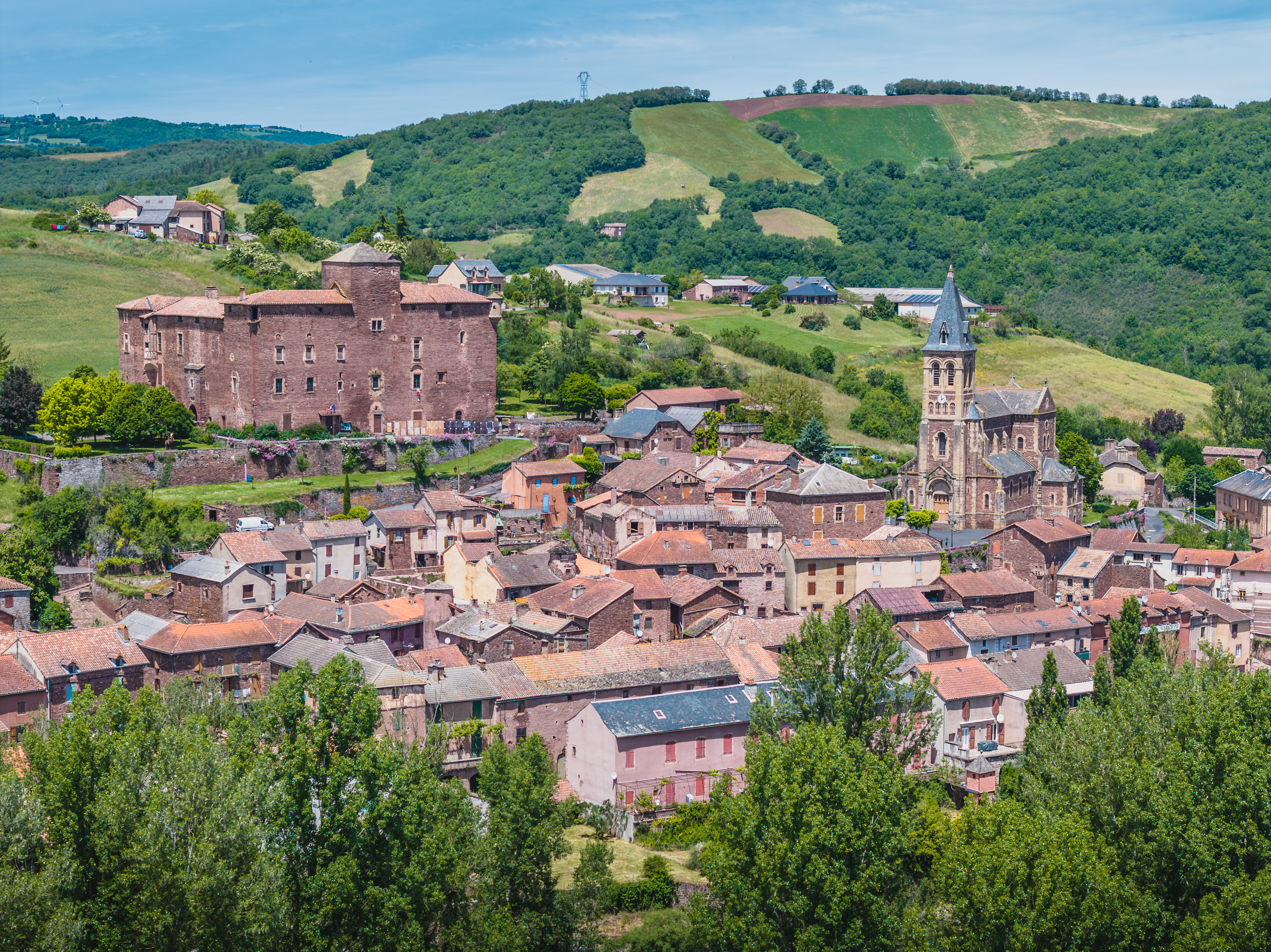
This charming stroll takes place on the hillsides of Saint-Izaire. Although oak trees and shrubs have taken the place of vineyards, the site still offers reminders of the wine-growing tradition and how it was related to the village. A magnificent scenic view provides the highlight of this stroll which is the perfect complement to the visit to the village with its calades and its Episcopalian castle.
4 points of interest
Village de Saint-Izaire - Virginie Govignon  History and heritage
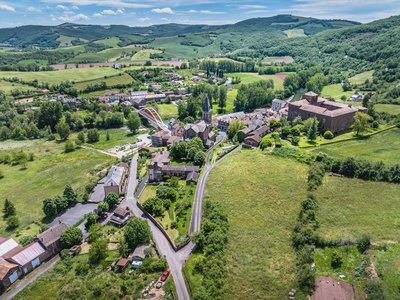
Village of Saint-Izaire
Saint-Izaire is a fortified village whose history is closely linked to its episcopal castle, the former summer residence of the bishops of Vabres. Mentioned as early as 862, the village gradually surrounded itself with ramparts during the 12th century to protect its inhabitants from feudal conflicts.
After the Wars of Religion, the fortifications lost their defensive role: openings were made in the walls, and some fortified gates were altered to allow carts to pass and houses to expand. Despite these changes, the layout of the streets, alleys, and houses has remained almost unchanged since the Middle Ages. The 15th- and 16th-century façades and windows still give the village its historic charm today.
Chaussée du Moulin de Saint-Izaire - Roquefort Tourisme History and heritageThe Saint-Izaire Mill
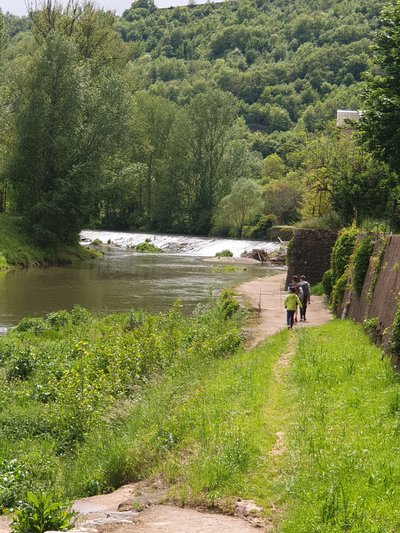
Mentioned as early as 1461, the Saint-Izaire mill was once used to grind wheat for the village inhabitants. A witness to the area’s rural past, it has endured through the centuries by adapting to the needs of each era.
Today, this historic mill operates as a small hydroelectric power station, continuing its energy-producing role at the heart of the village.
Château de Saint-Izaire - Virginie Govignon History and heritageSaint-Izaire Castle & Archery Museum
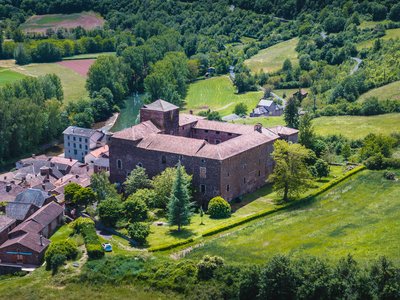
Built from red sandstone, Saint-Izaire Castle served both as a summer residence and a fortified refuge for the bishops of Vabres. With its square design, watchtowers, and elegant 17th-century arcades, it still overlooks the village today.
The castle now houses the Archery Museum, where visitors can discover rural art objects, traditional archery equipment, and reconstructions of a classroom and a 17th-century bishop’s bedroom. A fun discovery trail is also available for children.
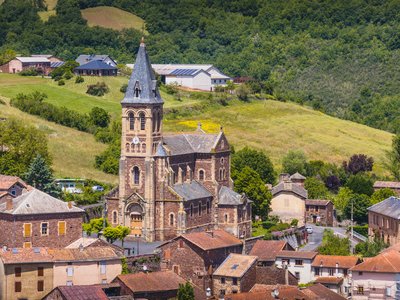
Eglise de Saint-Izaire - Virginie Govignon History and heritageChurch of Saint-Izaire
Built at the end of the 19th century, the church of Saint-Izaire replaced an older church that was once part of the village fortifications. Constructed using stones from the former building, it was consecrated in 1891 and remains the spiritual heart of the village today.
Inside, several treasures reflect the area’s religious history, including a beautiful statue of the Virgin and Child donated by a villager, as well as a wooden plaque dating from 1679. This inscription pays tribute to Bishop and Count of Vabres, François de La Valette-Cornusson, renowned for his humility and his participation in the Council of Trent.
Description
- Starting point is from the Place de la Bascule (carpark under the bridge) towards Faveyrolles via the D60. Follow that road which slopes gently down for approximately 1 km, then take to the right the « chemin des Vignes » that soon brings you back above the village. This path used to run across the vineyard of Saint Izaire that stretched over the whole hillside. Today, oak trees and other shrubs have taken back the site.
- After approximately 1 km, leave that track and turn right into a steep sided path that slopes down and is lined up with a double hedge (before doing so, we recommend you to keep walking on the « chemin des Vignes » for a hundred metres and enjoy the panoramic view over the castle and the village).
- The descending trail leads you back to the village nearby the castle which is worth visiting (this path is rather steep and requires caution).
- Get back to the starting point by calades and narrow streets.
- Departure : St-Izaire's center
- Arrival : St-Izaire's center
- Towns crossed : Saint-Izaire
Forecast
Altimetric profile
Information desks
Avenue de Lauras, 12250 Roquefort/Soulzon
Situated in the Grands Causses Regional Natural Park, the cheese village of Roquefort stretches on the hillside over the famous scree of the Combalou Rock, in southern Larzac. The village is at an elevation of 630 m and has 700 inhabitants.
OPENING PERIODS:
The Tourist Office is open all year round:
- In July and August, Monday to Saturday: 9.30 to 18.30, Sunday: 10.00 to 17.00.
- April, May, June, September, October; Monday to Saturday: 9.30 to 12.15 & 13.00 to 17.30, closed on Sunday.
- January, February, November, December; Monday to Friday: 9.30 to 12.15 & 13.00 to 17.00, closed on Saturday and Sunday.
Transport
Getting around by bus or by train: https://lio.laregion.fr/
Car sharing: BlaBlaCar, Rézo Pouce, Mobicoop, Idvroom, LaRoueVerte, Roulez malin
Access and parking
From Millau, take the D992, then the D999 up to Vabres l'Abbaye, from Albi via the D999, in Vabres l’Abbaye take to the West the D25. Saint-Izaire is a 16 km drive from Vabres l’Abbaye.
Parking :
Report a problem or an error
If you have found an error on this page or if you have noticed any problems during your hike, please report them to us here: