
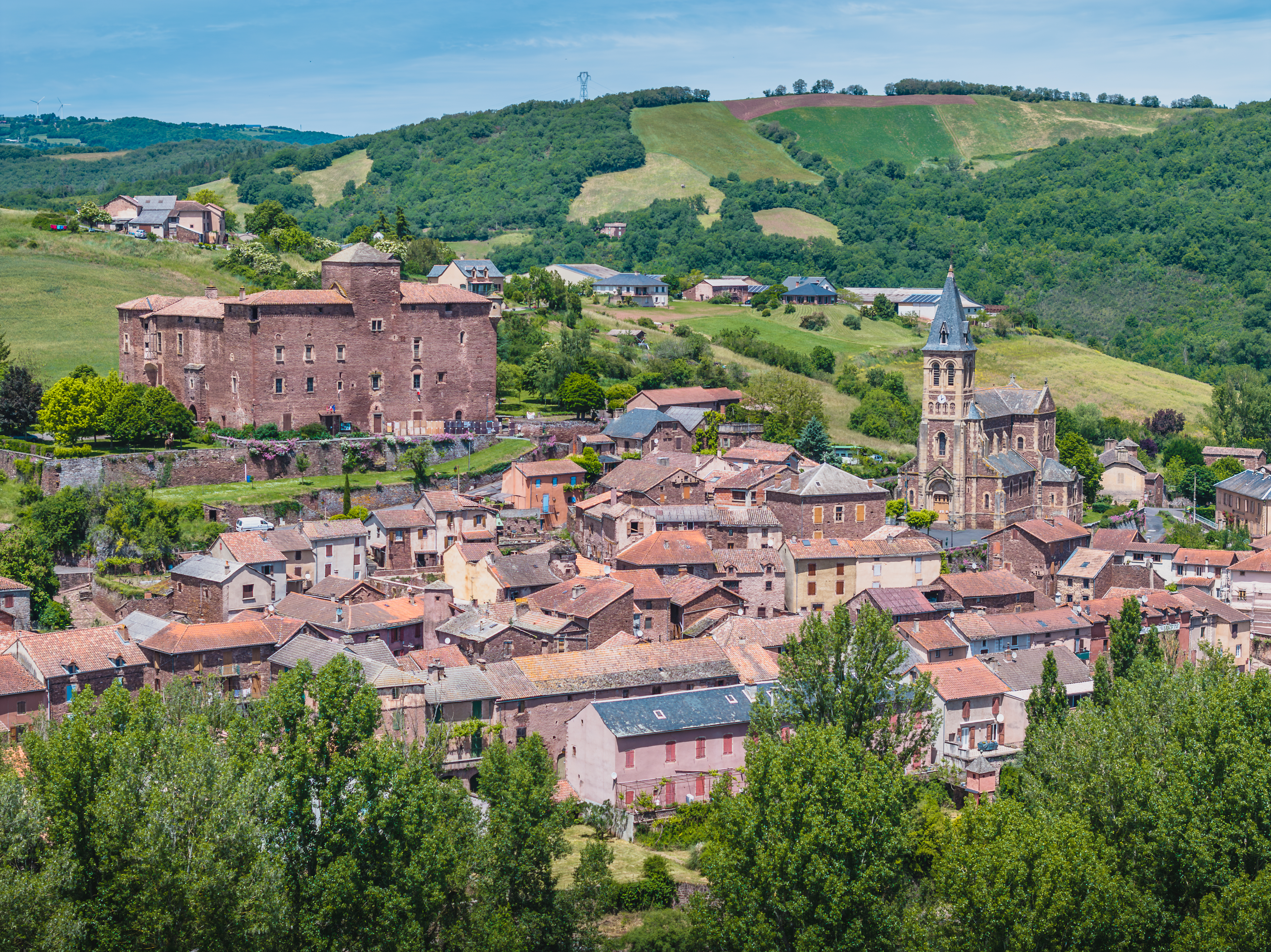
N°9 The castle trail
Right from the beginning and throughout your riding, you will enjoy beautiful scenic viewpoints over Saint-Izaire and the Dourdou meanders. This circuit offers plenty of shade.
2 points of interest
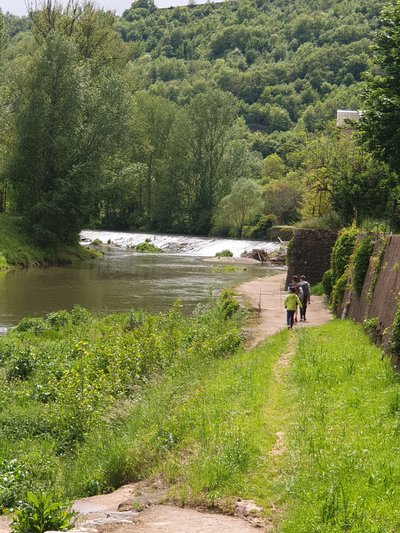
Chaussée du Moulin de Saint-Izaire - Roquefort Tourisme  History and heritage
The Saint-Izaire Mill
Mentioned as early as 1461, the Saint-Izaire mill was once used to grind wheat for the village inhabitants. A witness to the area’s rural past, it has endured through the centuries by adapting to the needs of each era.
Today, this historic mill operates as a small hydroelectric power station, continuing its energy-producing role at the heart of the village.
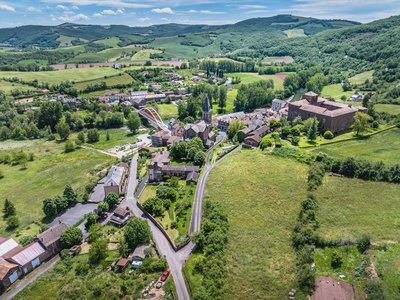
Village de Saint-Izaire - Virginie Govignon History and heritageVillage of Saint-Izaire
Saint-Izaire is a fortified village whose history is closely linked to its episcopal castle, the former summer residence of the bishops of Vabres. Mentioned as early as 862, the village gradually surrounded itself with ramparts during the 12th century to protect its inhabitants from feudal conflicts.
After the Wars of Religion, the fortifications lost their defensive role: openings were made in the walls, and some fortified gates were altered to allow carts to pass and houses to expand. Despite these changes, the layout of the streets, alleys, and houses has remained almost unchanged since the Middle Ages. The 15th- and 16th-century façades and windows still give the village its historic charm today.
Description
This circuit which has easy gradients can be combined with circuit n° 10 “Le Bois Noir”. The two circuits share the same starting point.
Follow the road towards Faveyrolles for about 1 km.
- Take the path to your right and enjoy the beautiful view overlooking the village. Pass alongside the deserted farm of Graudenc, then carry on along a path that picks its way through the undergrowth. Pass under the high voltage line and then cycle down towards the valley de Gos. Take your time to enjoy the nice views over the Dourdou valley on the eastern side. The Tarn valley is to the North and the Gos valley to the SW.
- Cycle up to a cross by the side of the trail, leave the trail here taking the path to the left that runs across a field up to some woodland.
- After a hairpin bend, cycle towards the sandpit and the banks of theTarn river. Carry on alongside the shady bank on the left side of the river, pass along the hamlet of les Alvernhes, and then follow the road for 300 m.
- Cycle down under the stone bridge of the former railway line. Then take the trail alongside the railway line that enables you to bypass the old tunnel by way of a 16th century house called Janolles. Follow the river and cycle under the bridge to reach the farm Mas de Gascuel from the left hand side. You will eventually end the circuit by cycling along a path which slopes gently down to Saint-Izaire.
Saint-Izaire: Former residence of the Vabres l’Abbaye bishops, the castle and the village are built in red sandstone. The castle dates from the 9th century, and was remodeled during the 14th century by the bishop who was to become Pope John XXII. The Bishops’ bedroom with its magnificent wooden floor and fine frescoes is the gem of the castle. The lovely houses and dovecotes that you will see in the village are built in the style of the Albigeois period.
- Departure : Saint-Izaire
- Arrival : Saint-Izaire
- Towns crossed : Saint-Izaire
Forecast
Altimetric profile
Recommandations
Box tree moths are active from May to October. During the caterpillar phase, they feed on the leaves of box trees. They crawl down trees and move on long silken threads, although these threads are annoying when hiking they do not pose any health risk
Information desks
Saint-Affrique Tourist Office
Boulevard Aristide Briand, 12400 Saint-Affrique
OPENING TIMES:
The Tourism Office is open all year round, the opening hours are:
·July and august:
From Monday to Saturday: 9h – 13h & 15h – 19h
Sunday: 9h – 13h
·From September to June:
From Tuesday to Saturday: 9h – 13h & 14h – 17h
Closed: Sundays, Mondays and bank holidays
From November to April, the office is also closed on Saturday afternoon.
Transport
Travel by bus or train: https://lio.laregion.fr/
Carpooling : BlaBlaCar, Rézo Pouce, Mobicoop, Idvroom, LaRoueVerte, Roulez malin
Access and parking
Starting from Millau via the D992 road first, then via the D999 road up to the roundabout before Vabres l’Abbaye. Starting from Albi follow the D999 up to Vabres where you turn right onto the D25 road that leads to St-Izaire which is a 16 km drive from Vabres.
Parking :
More information


Report a problem or an error
If you have found an error on this page or if you have noticed any problems during your hike, please report them to us here: