
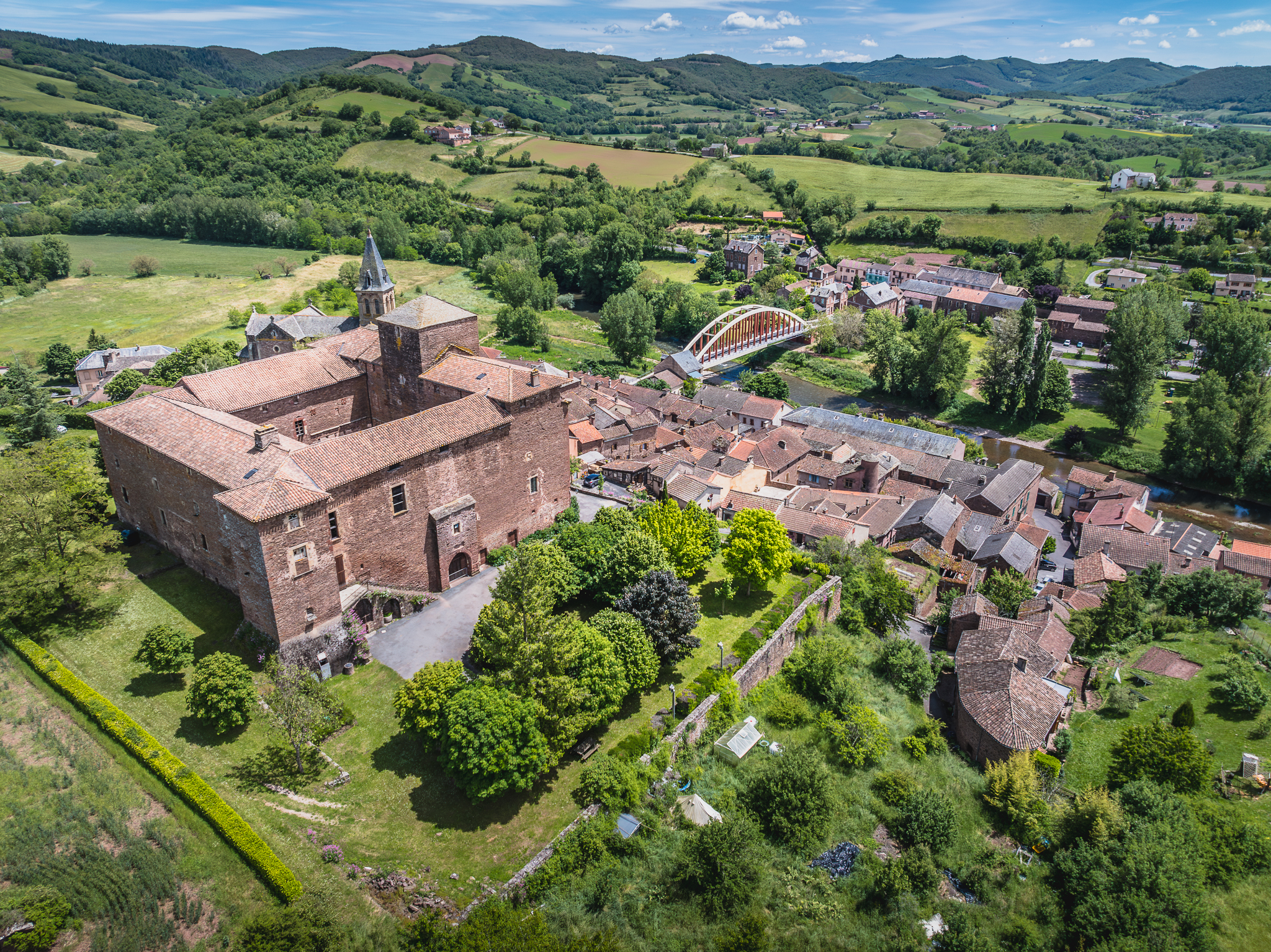
VTT N°10 - The Black Wood
Along scenic trails through the woods and sections of singletrack, this easy route winds through a beautiful landscape dotted with remarkable heritage sites : a chapel, a statue-menhir, and the birthplace of the famous archaeologist Abbé Hermet. At the end of the route, enjoy panoramic views over Saint-Izaire, a true red sandstone gem on the banks of the Dourdou River.
3 points of interest
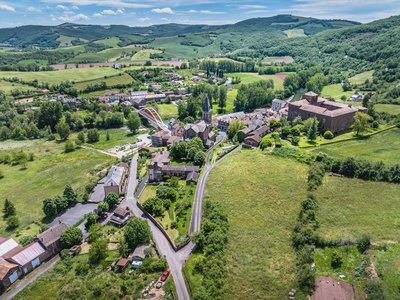
Village de Saint-Izaire - Virginie Govignon  History and heritage
Village of Saint-Izaire
Saint-Izaire is a fortified village whose history is closely linked to its episcopal castle, the former summer residence of the bishops of Vabres. Mentioned as early as 862, the village gradually surrounded itself with ramparts during the 12th century to protect its inhabitants from feudal conflicts.
After the Wars of Religion, the fortifications lost their defensive role: openings were made in the walls, and some fortified gates were altered to allow carts to pass and houses to expand. Despite these changes, the layout of the streets, alleys, and houses has remained almost unchanged since the Middle Ages. The 15th- and 16th-century façades and windows still give the village its historic charm today.
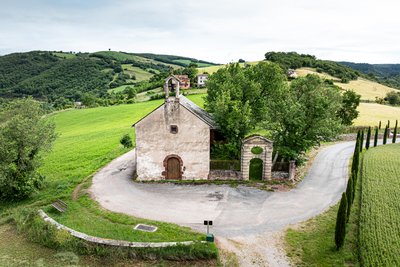
Chapelle Notre Dame de Grâce - Xavier Waerzeggers History and heritageChapel of Our Lady of Grace
Overlooking the southern bank of the Dourdou River, the Chapel of Our Lady of Grace is an emblematic site of Saint-Izaire. Mentioned as early as 1461 under the name “Notre-Dame de l’Ouradou,” it was restored in 1730 before being sold as national property during the French Revolution and later converted into a sheepfold. Restored again in the 19th century, it now incorporates architectural elements from the former castle and old village church.
For many years, the chapel housed a relic believed to have protective and healing powers, especially against skin diseases and respiratory illnesses, and for the protection of pregnant women and newborns. These beliefs left a strong mark on local memory, making the chapel a symbol of protection for the village.
This tradition continues today through annual pilgrimages, particularly on August 15th.
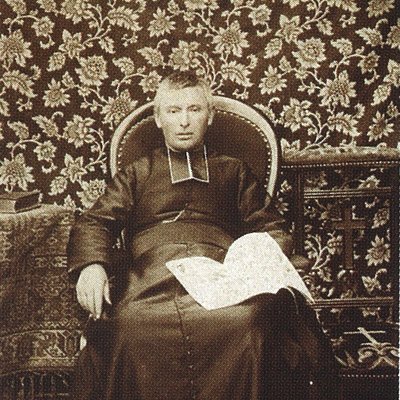
Abbé Hermet - Delphine Atche History and heritageAbbot Hermet’s House
Born in Calmels in 1856, Abbot Frédéric Hermet developed a passion for menhir statues from a young age. At the age of ten, he made his first archaeological discoveries, but it was in 1888, when he stumbled upon the “Dame de Saint-Sernin,” that he truly embarked on a quest for other carved slabs. He studied these monuments and brought them to the attention of the scientific community between 1892 and 1926. In 1898, he coined the term “menhir statues” for these mysterious sculptures. Alongside his work on these prehistoric monuments, Abbot Hermet became a pioneer of archaeological excavations at Graufesenque, near Millau, where he explored Gallo-Roman remains starting in 1901.
Description
Climb up to the Notre-Dame de Grâce Chapel, then go around it on the left to join the former railway line, which leads you towards the hamlet of Les Roques.
- Follow a red dirt track along the hillside until you reach a statue-menhir. Take the path on the right to reach the top of the woods.
- Continue eastwards, then descend towards the Cambon plain (near the Bousquet farm). On the left, the track takes you back up to the top of the "Bois Noir".
- A shaded trail leads you back towards Mas Capelier (the birthplace of Abbé Hermet), then to the road. Cross the road and go through the hamlet of Riols.
- Further along the road, a trail on the left takes you back to the chapel, offering commanding views over the village of Saint-Izaire.
- Departure : At the bridge on the village side, Saint-Izaire
- Arrival : At the bridge on the village side, Saint-Izaire
- Towns crossed : Saint-Izaire and Calmels-et-le-Viala
Forecast
Altimetric profile
Information desks

Saint-Affrique Tourist Office
Boulevard Aristide Briand, 12400 Saint-Affrique
OPENING TIMES:
The Tourism Office is open all year round, the opening hours are:
·July and august:
From Monday to Saturday: 9h – 13h & 15h – 19h
Sunday: 9h – 13h
·From September to June:
From Tuesday to Saturday: 9h – 13h & 14h – 17h
Closed: Sundays, Mondays and bank holidays
From November to April, the office is also closed on Saturday afternoon.
Transport
All the information is available on the Tourist Office website.
Access and parking
From Saint-Affrique, take the road towards Albi, then at Vabres-l’Abbaye turn right onto the D25 towards Saint-Izaire.
Parking :
More information


Report a problem or an error
If you have found an error on this page or if you have noticed any problems during your hike, please report them to us here: