
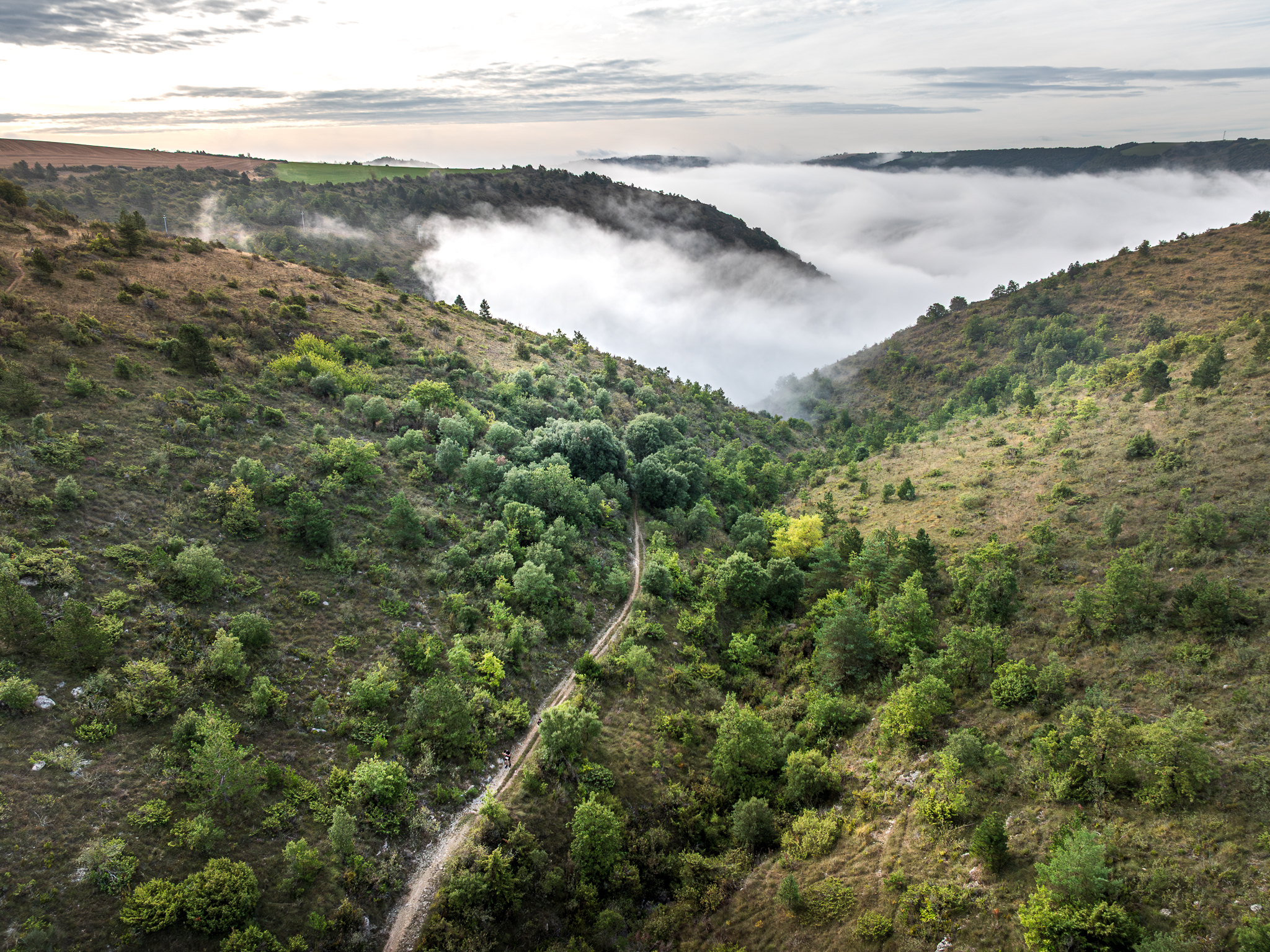
Trail N°29 Versols - Hermilix
The attractive side: a box-tree maze and a ford across a brook. The technical side: a single track along the edge of a ravine, a downhill section to be managed cautiously and a final ascent that might surprise many people. With the hallmark of the lavogne, a watering place for sheep in Hermilix, this unique running trail stretches throughout an agro-pastoral landscape, where you only go down to go up again!
5 points of interest
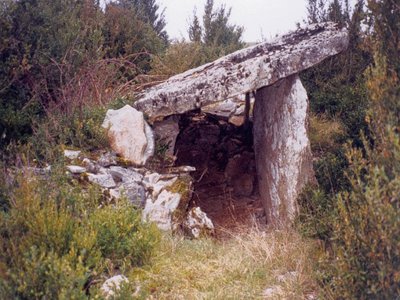
Dolmen d'Hermelix - PNR Grands Causses  Dolmen
Hermilix dolmen
Built nearly 5,000 years ago, dolmens are prehistoric funerary monuments erected by Neolithic communities. Originally covered by a mound of stones and earth, these burial chambers were used for successive interments over generations. They are particularly numerous on the Causses, where large limestone slabs were readily available for their construction.
This simple dolmen stands on a mound about 8 metres in diameter. Lacking a back slab, it still preserves its impressive capstone, which now leans slightly due to the gradual settling of one of its supporting stones over time.
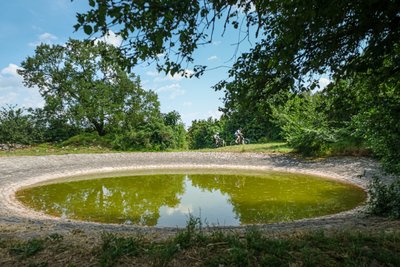
Lavogne d'Hermilix - Virginie Govignon  Agropastoralism
Hermilix Lavogne
Typical of the Causses region, lavognes are traditional water reservoirs designed to collect and retain rainwater in an area where water quickly disappears into the limestone bedrock. Built around a natural depression with an impermeable clay base, they were essential for providing drinking water to livestock.
To preserve water quality and prevent erosion caused by animals, the bottom and edges were carefully paved with stone slabs and flat stones.
Today, the Hermilix Lavogne is also a haven for a wide variety of wildlife, making it a small but thriving ecosystem.
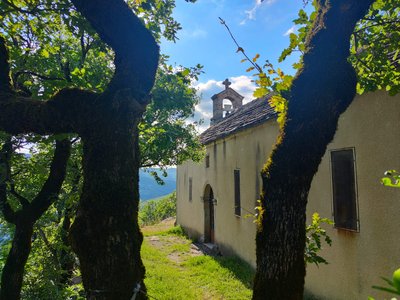
Chapelle Notre Dame du Cayla - Roquefort Tourisme  History and heritage
Chapel of Our Lady of Cayla
Visible from the trail, about 2 km from Versols, the Chapel of Cayla stands on a rocky spur overlooking the ravine. Its origins remain a mystery: was it once a fortified site, or a pre-Christian place of worship later converted to Christianity?
Mentioned as early as the 12th century, it became an important pilgrimage site for the people of the valley and the nuns of Nonenque. Abandoned in the early 19th century, it was restored from 1861 onwards thanks to the efforts of Abbé Brun, the parish priest of Versols.
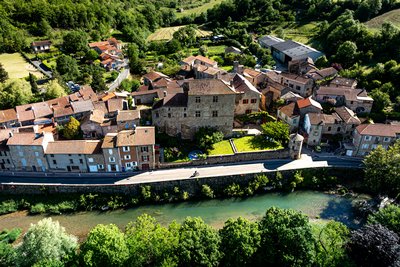
Château de Versols - Xavier Waerzeggers History and heritageCastle and Fortification Remains
For nearly eight centuries, from 1250 to 1810, the castle was home to the Roquefeuil family. After leaving the family’s ownership, it passed through several hands, and part of the complex was converted into a farm. The estate was eventually repurchased by the Roquefeuil family in 1962.
The castle was part of a larger medieval castrum that enclosed the former village, perched on a spur between the Sorgues and Verzolet rivers. Originally a small fortress built in the 11th century, it was expanded during the 13th and 14th centuries to strengthen the site's defenses during periods of conflict, particularly the Hundred Years’ War.
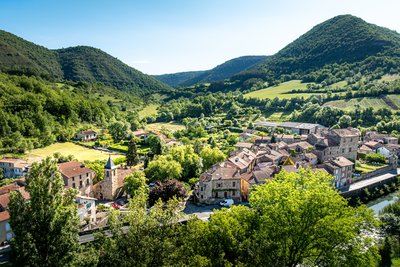
Village de Versols - Xavier Waerzeggers History and heritageVillage of Versols
The village of Versols has a rich history dating back to the Middle Ages. Its fortified settlement, built on a slight ridge at the junction of two valleys, succeeded an earlier Gallo-Roman site and once overlooked the major medieval route to Lodève.
Today, the village still preserves many traces of its defensive past, including a fortified gate, a tower, sections of ramparts, and elegant mullioned windows. Its main street and postern gate reflect the medieval layout of the settlement.
Versols is also home to the Church of Saint Thomas, while nearby stand the former Priory of Our Lady of Cayla and the Château de Montalègre, built in the 13th century.
Description
- As soon as you cross the bridge, you quickly leave the village through a passageway and a pretty little lane leading directly to the trail climbing up to Sayssou: 270 m of elevation gain over 2.1 km, along a beautiful singletrack winding along the hillside above the ravine.
- Once you reach Sayssou, the landscape changes. You enter an agricultural plateau crossed by a maze of straight buissières (traditional boxwood lanes), leading to the hamlet of Hermilix, known for its dolmens, lavogne and buissières.
- Once past the large farm, the descent into the Verzolet Valley begins. It starts along a beautiful trail enclosed by a lush vegetation tunnel, before the slope steepens and the trail becomes highly technical, requiring caution due to the many loose stones and rock piles (clapas) along the way.
- At the bottom of the valley, cross the stream via a very old footbridge hidden beneath moss-covered boxwood.
- You then begin the gentle climb back up the left bank of the Verzolet to join the trail that loops around Mont-Grand. The start is demanding, with a steep climb gaining 270 m over 2 km.
- Once over the summit, the descent takes you past the La Calm forest farm and Notre-Dame du Cayla, along a gentler slope, bringing you back to this peaceful village with its well-preserved château, narrow medieval-style streets and old houses.
- Departure : Car park on the left bank of the Sorgues just after the bridge, Versols
- Arrival : Car park on the left bank of the Sorgues just after the bridge, Versols
- Towns crossed : Versols-et-Lapeyre and Saint-Affrique
Forecast
Altimetric profile
Recommandations
Water supply - Energy snacks - Suitable sports shoes - Rain jacket
Bring a supply of water and suitable clothing.
Information desks

Saint-Affrique Tourist Office
Boulevard Aristide Briand, 12400 Saint-Affrique
OPENING TIMES:
The Tourism Office is open all year round, the opening hours are:
·July and august:
From Monday to Saturday: 9h – 13h & 15h – 19h
Sunday: 9h – 13h
·From September to June:
From Tuesday to Saturday: 9h – 13h & 14h – 17h
Closed: Sundays, Mondays and bank holidays
From November to April, the office is also closed on Saturday afternoon.
Transport
All the information is available on the Tourist Office Website.
Access and parking
Versols is situated 10 km south of Saint-Affrique via the D7 road towards Cornus.
Parking :
Report a problem or an error
If you have found an error on this page or if you have noticed any problems during your hike, please report them to us here: